Implant-Supported Dentures vs. Traditional Dentures: A Guide for Portland-Area Patients
If your dentures move when you eat, laugh, or talk, you may be wondering whether implant-supported dentures are worth considering. The short answer is that implant-supported dentures may provide added retention and stability for appropriate patients, while traditional dentures remain a removable option that works well for many people. The better choice depends on your denture fit, oral health, treatment goals, timeline, and the advice of your dental providers.

The Denture Studio does not publish verified prices for either option, so no exact cost comparison can be given from the available information. A traditional denture quote may focus mainly on the denture and related adjustments. An implant-supported plan may also include implant-related treatment, attachments, follow-up, and future maintenance. You will need an itemized, patient-specific quote to compare the total cost. This guide explains what to ask about stability, daily cleaning, maintenance, treatment steps, and cost before choosing.
How Stability and Daily Care Compare
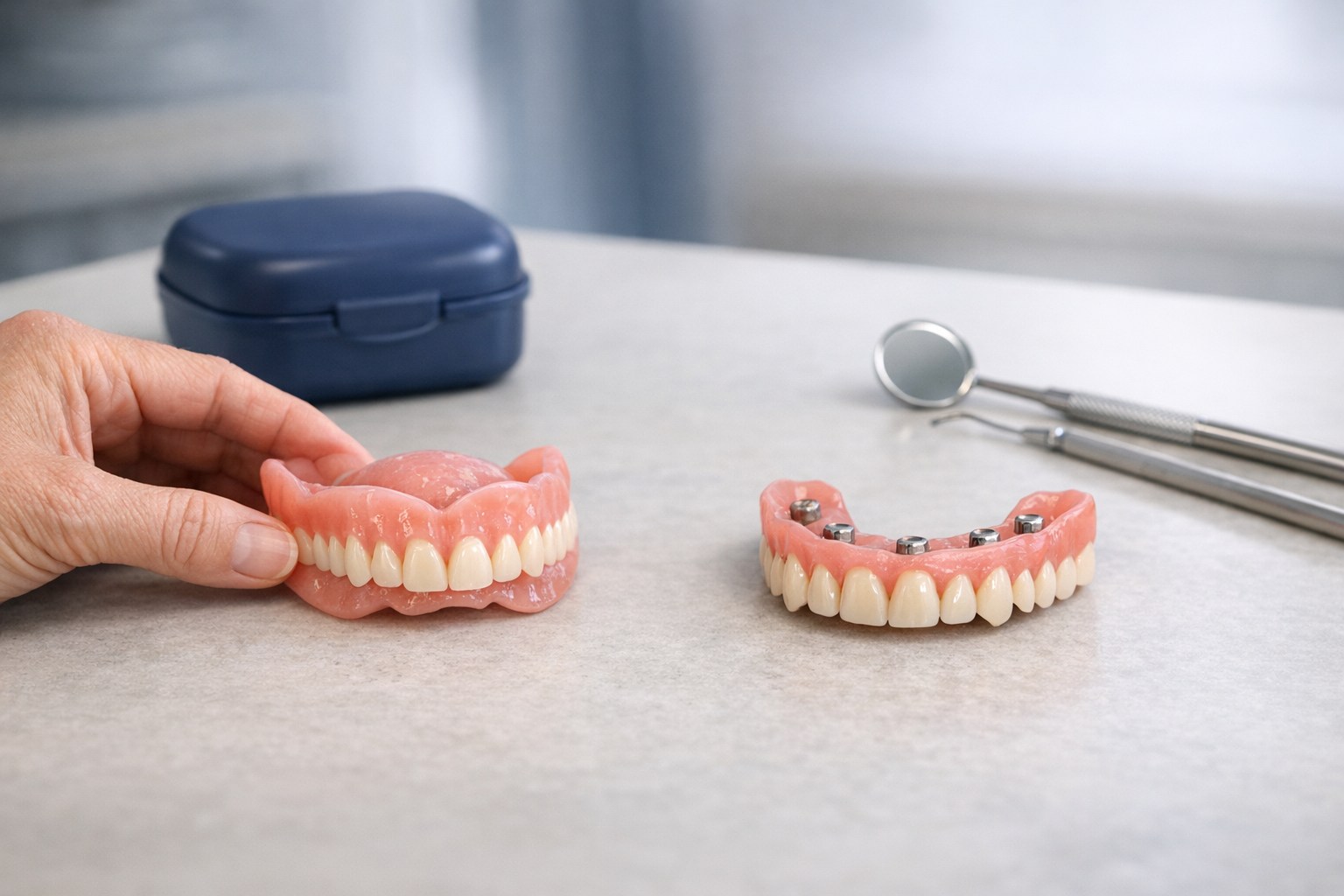
Both options use a removable denture, but they stay in place in different ways. Traditional dentures rely mainly on the fit of the appliance and the shape of your mouth. Implant-supported or implant-retained dentures use dental implants as additional points of retention. That difference may matter if you are tired of repositioning your denture during meals or worrying about movement while speaking.
Stability During Eating and Talking
A traditional denture can feel comfortable and secure when it fits well. However, an older denture, normal changes in your mouth, wear, or a poor fit can contribute to movement. If you avoid certain foods, speak differently, or use your tongue to keep the denture in place, ask whether an adjustment, reline, replacement, or implant-supported option should be considered.
Implant-supported dentures are designed to use implants to help retain the removable appliance. For appropriate patients, that may reduce unwanted movement during everyday activities. It is not a promise that every movement will disappear, and the result depends on the implant plan, denture design, and your individual situation. Ask whether the proposed denture will be removable and how it will connect to the implants.
Cleaning Is Different, Not Optional
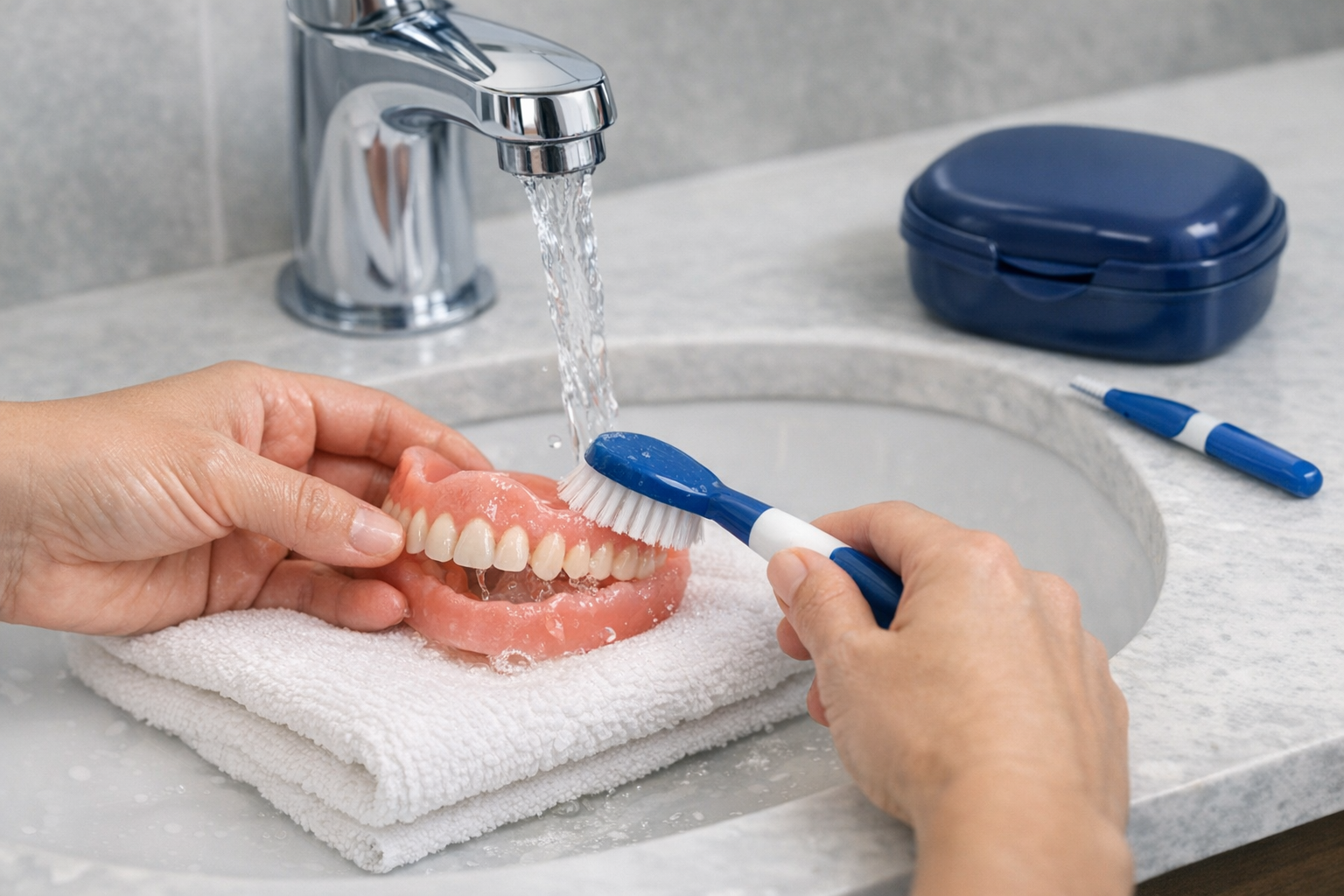
Traditional dentures should be removed and cleaned according to the instructions you receive. Your gums and the rest of your mouth still need regular attention, even when you no longer have natural teeth. Handle the denture carefully, and use only cleaning products recommended for its materials.
With an implant-supported denture, you still clean the removable denture, but you may also need to clean around the implants, attachments, and nearby tissues. The exact tools and routine can vary by design. Ask your providers to show you how to clean each part. A denture that feels more secure still requires daily care and professional follow-up.
Removability and Everyday Convenience
Traditional dentures can be removed without implant attachments. That may appeal to someone who wants a straightforward removable option or is not pursuing implant treatment. If your current denture has become loose, a professional evaluation may show that a repair, adjustment, or reline is reasonable instead of starting over.
Implant-supported dentures are also commonly removable, but they connect to a retention system. That can add stability while also adding another part of the treatment to understand and maintain. If you already have implants, bring any available treatment information to your consultation. The denture design needs to account for the implant system already in place.
How to Compare Maintenance, Timing, and Total Cost
The most useful comparison is not simply “traditional versus implant.” It is the complete treatment pathway for each option. Ask what happens before the denture is made, what is included after delivery, who handles each stage, and what care may be needed later. This is especially important when a loose denture has made you eager for a fast solution.

Maintenance and Future Care
Traditional dentures may need adjustments or relines as your mouth changes or as the appliance wears. A repair may be appropriate for a broken base or missing tooth. Replacement may make more sense when the denture has significant wear, damage, or repeated fit problems. The Denture Studio provides denture repairs, relines, and adjustments, including certain same-day services when appropriate. Not every case can be completed the same day, so describe the problem before making plans.
Implant-supported dentures require attention to both the denture and the implant-retention system. Ask who will evaluate the implants, who will adjust or repair the denture, how follow-up is scheduled, and what happens if an attachment or replacement part is needed. Also ask whether future relines, repairs, replacement dentures, or maintenance visits are included in the quote or billed separately.
Treatment Steps and Timing
Traditional full dentures generally involve evaluating your mouth, designing and fabricating the appliance, checking the fit, and making needed adjustments. The supplied service information notes that conventional full dentures may take about three to four weeks to fabricate, although the timeline varies by case and appointment schedule. Immediate dentures follow a different process because they are planned around extractions.
Implant-supported dentures add an implant-related stage. Implant surgery and medical candidacy questions should be discussed with the appropriate implant dentist or dental provider. The denturist can explain the denture design, fit, and fabrication side of the process. Ask how the providers coordinate, whether healing time affects the schedule, and what you will wear or use during the transition. Do not choose implants based only on frustration with movement.
A Practical Way to Compare Your Quotes
The Denture Studio does not publish verified prices for either option, so request an itemized quote based on your needs. For each choice, write down the denture fee, examination or diagnostic fees, planned adjustments, relines, repairs, implant-related fees, attachments, follow-up visits, replacement parts, and expected timeline. Then ask which items are included, which are optional, and which provider handles each stage.
Use the quoted numbers to estimate your total commitment: add one-time fees and setup charges, include recurring or expected maintenance, and consider indirect costs such as travel or time away from work. If a provider offers a payment plan, review the full amount paid, the contract term, and any separate fees. Do not assume one option costs less without comparing the same categories across both written plans.
As a hypothetical example, someone who avoids restaurants because a lower denture moves may place high personal value on added retention. Another person may prefer a removable option without implant treatment because a simpler treatment path fits their priorities. Neither example proves which choice is best. Your consultation should connect the treatment plan to your comfort, health, schedule, and budget.
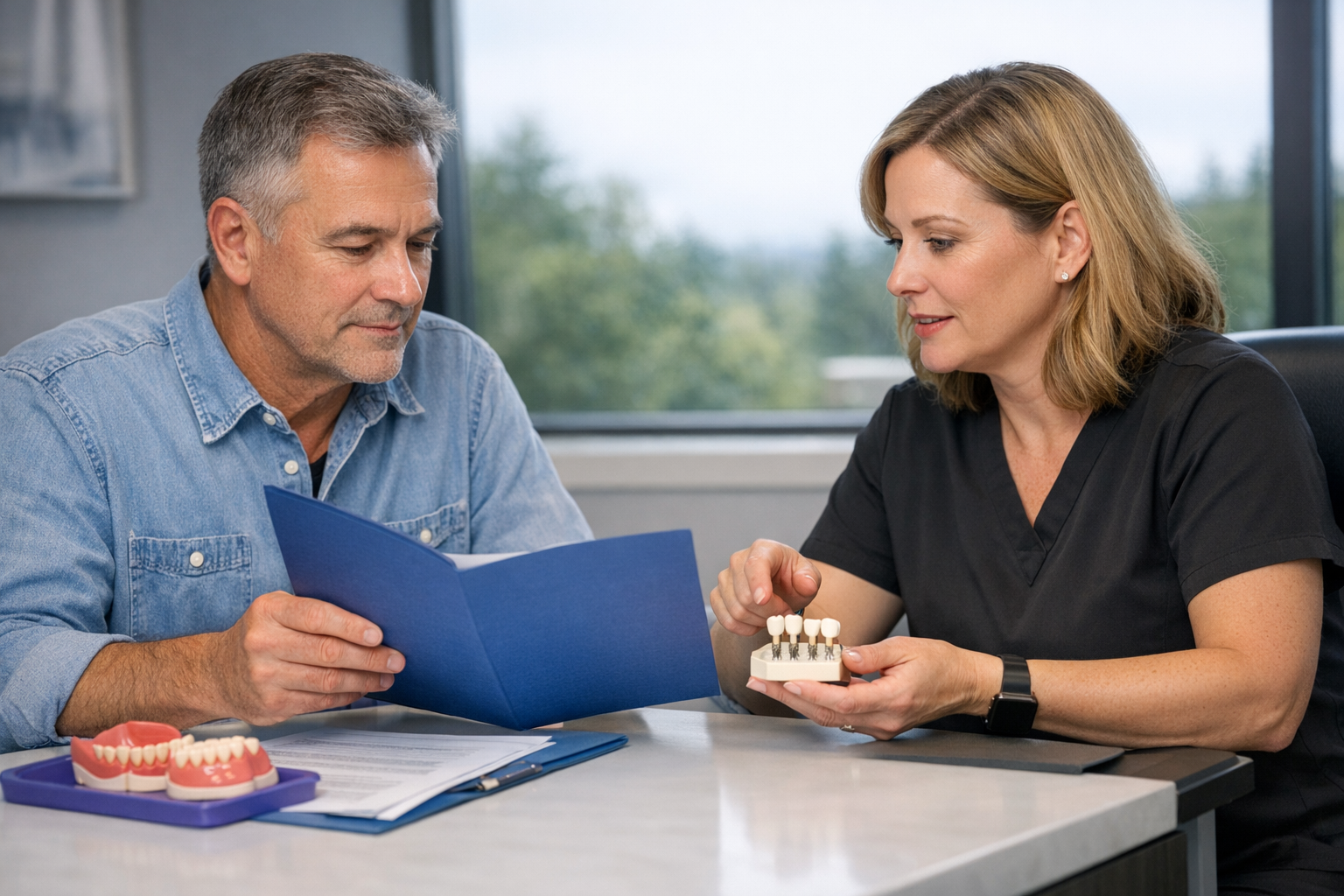
If you are in Portland or the surrounding metro area, The Denture Studio can review what you are wearing now and explain the questions about dentures to bring to your implant dentist. Its Gresham clinic and on-site laboratory serve patients throughout the Portland Metro. Start with a conversation before selecting a treatment based only on a product name or online description.
Portland-Area Denture Comparison FAQ
Are implant-supported dentures more stable than traditional dentures?
They may provide additional retention and reduce unwanted movement for appropriate patients because implants help hold the removable denture in place. The result depends on your mouth, implant plan, and denture design, so ask for an individualized explanation rather than assuming a guaranteed result.
Are implant-supported dentures harder to clean?
They require cleaning of the removable denture plus careful cleaning around the implant-supported areas and attachments. Ask your providers to demonstrate the recommended routine and products for your specific design.
Which option costs less?
No verified prices are supplied for either option, so an exact comparison is not available. A traditional denture quote may focus on the denture and adjustments, while an implant-supported plan may also include implant-related treatment, attachments, follow-up, and future maintenance. Request itemized quotes and compare matching categories.
Can a loose traditional denture be repaired instead of replaced?
Sometimes. A professional may recommend an adjustment, reline, or repair if the denture is otherwise suitable. If it is badly worn, damaged, or no longer supports a good fit, replacement may be more practical. The Denture Studio evaluates repairs and relines before assuming a new denture is required.
What should I ask before choosing implant-supported dentures?
Ask who handles each treatment stage, whether the denture is removable, how the implants and attachments will be cleaned, what follow-up is expected, how long the process may take, what happens if the fit changes, and which fees are included in the written quote.