Can I Switch From Regular Dentures to Snap-In Dentures? What Gresham Patients Should Know
Yes, switching from regular dentures to snap-in dentures may be possible, but it is not always as simple as adding clips to the denture you already own. The decision depends on factors such as your mouth, bone, general health, the condition of your current denture and the implant plan recommended by your dental providers. Some patients may need a new removable overdenture designed for implants instead of a modification to their existing appliance.
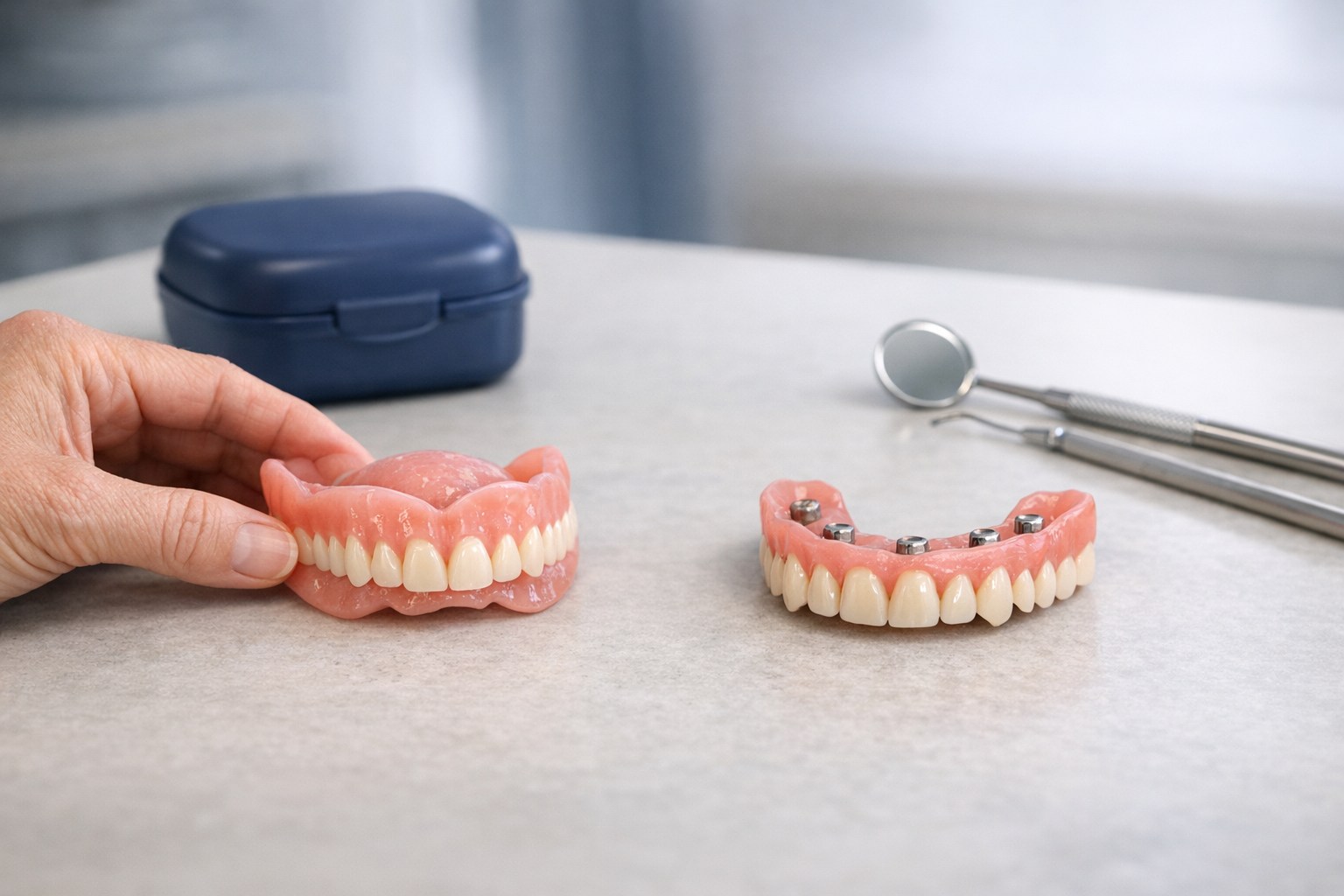
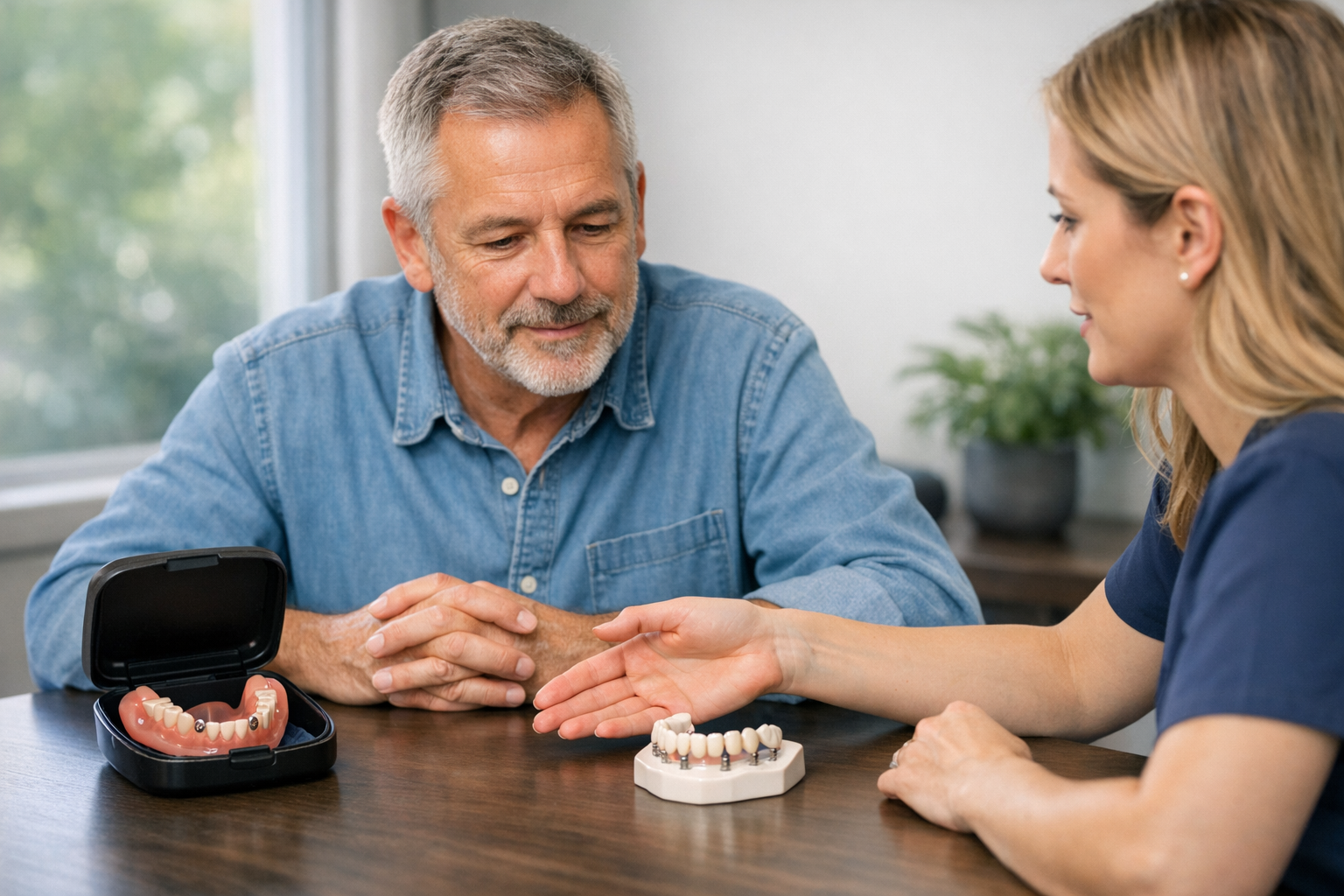
Snap-in dentures are a type of removable implant-supported or implant-retained denture. Dental implants provide additional retention, while the denture can still be removed for cleaning. If your current denture moves, feels difficult to manage or no longer meets your needs, a consultation can help determine whether implant support is worth exploring and what steps may be involved.
What Determines Whether You Can Make the Switch?
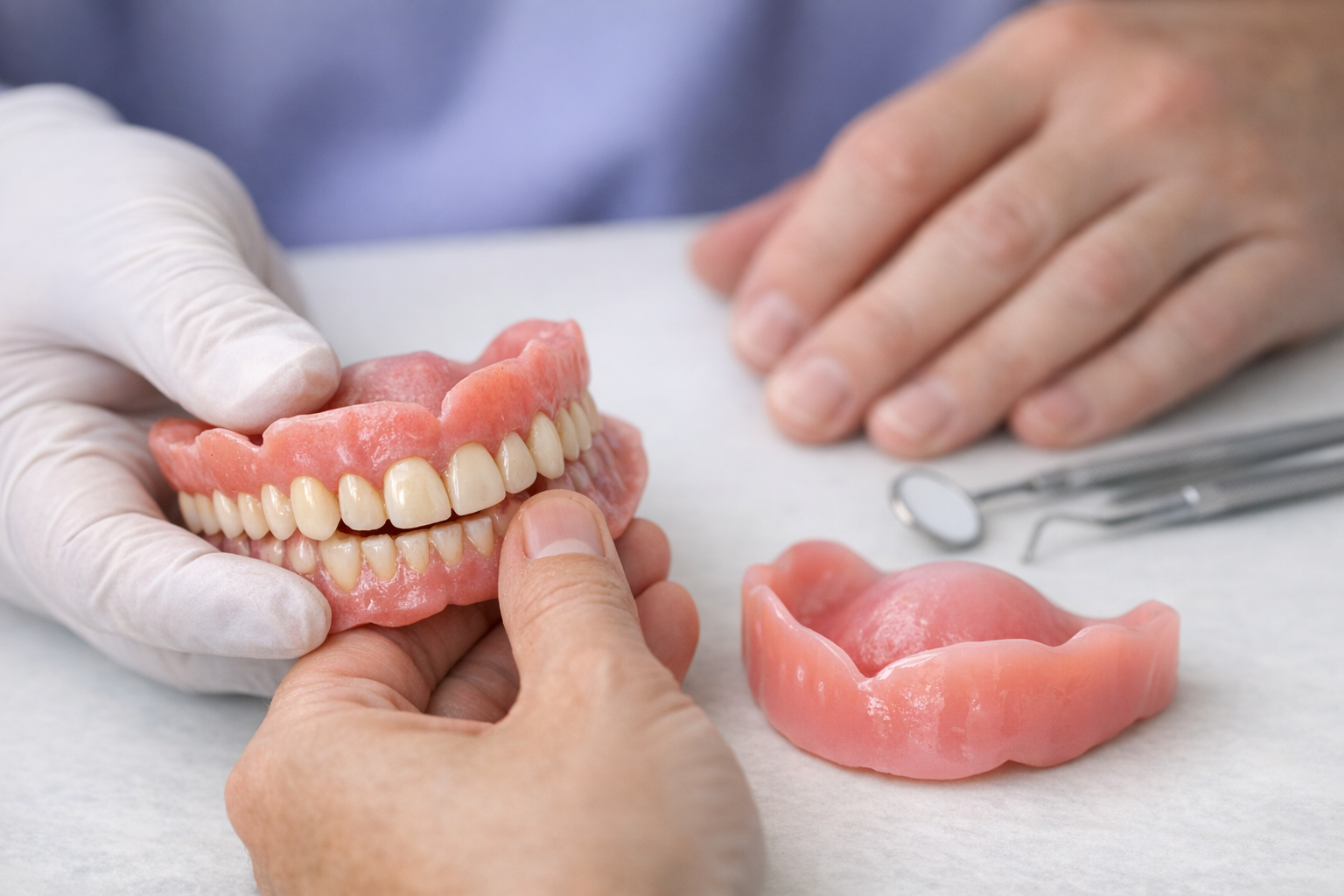
The first question is not simply whether your current denture can be connected to implants. The more useful question is whether an implant-retained denture is appropriate for your mouth, goals and treatment circumstances. The implant provider evaluates the surgical side, while the denture professional considers the appliance, bite, fit and design. These parts need to work together before anyone can say whether your existing denture is adaptable or whether a new one makes more sense.
A practical evaluation should compare your current problems with what snap-in support could realistically address. More retention may help some patients, but it does not guarantee that every movement, sore spot or chewing concern will disappear. Ask the providers involved to explain which problem the proposed treatment is intended to address and what limitations may remain.
Your Mouth, Health and Implant Plan
Bone, gum health, medical history and other aspects of your health can affect whether implants are appropriate and how they should be planned. The number and position of implants, available space, your bite and the future denture design all matter. These are clinical decisions that must be verified by the professionals evaluating you; a website or general checklist cannot determine eligibility.
If you already have implants, bring any information you have about their location, system and attachments. If you are considering implants for the first time, ask which provider will evaluate and place them, how the denture professional will coordinate with that provider and what happens if the plan needs to change. The Denture Studio provides implant-supported and implant-retained dentures, but your implant provider must verify the surgical and health-related aspects of treatment.
Can Your Current Denture Be Adapted?
Sometimes an existing denture may provide useful information about your tooth arrangement, appearance preferences and bite. However, age, wear, looseness, damage, poor fit or changes in your mouth may make it unsuitable for a long-term implant-retained design. The attachment positions also need to match the implant plan, and the denture must have enough strength and space for the intended components.
Ask for a direct assessment rather than assuming that keeping the old denture will be simpler or less expensive. A denture that looks acceptable in your hand may still need changes to its fit, base, teeth or bite. In other cases, starting with a new overdenture may provide a better foundation for the implants and attachments. A written explanation of both options can make the trade-offs easier to understand.
The Condition of the Denture Still Matters
A denture that is cracked, heavily worn or repeatedly repaired may not be a good candidate for conversion. A relatively sound denture may still need a professional evaluation, adjustment or reline before the next stage. Do not use do-it-yourself adhesives, drill holes or attempt to install attachments yourself. Changes made without a coordinated plan can damage the appliance or make later work more difficult.
If your current denture is mainly loose because your mouth has changed, a reline or adjustment may be worth discussing before you commit to implant treatment. The Denture Studio also offers denture repairs, relines and adjustments, so an evaluation can help distinguish a correctable denture-fit problem from a need for more retention. Review the Denture Repairs & Relines service before assuming that implants are the only answer.
What the Switching Process Usually Involves
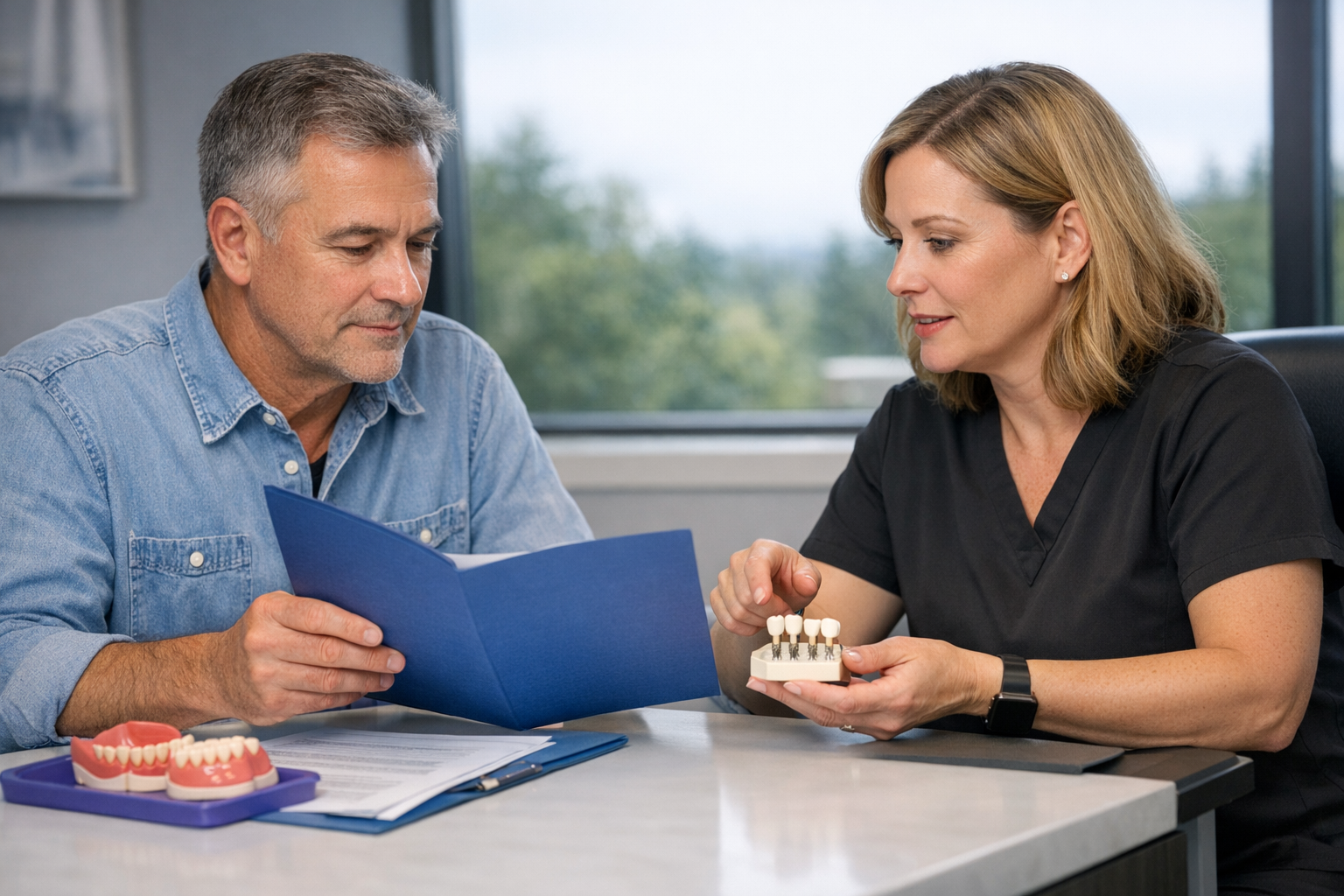
Switching to snap-in dentures is usually a staged process rather than a single appointment. The exact order, timing and providers can vary. During a consultation at The Denture Studio, bring your current denture and describe what you want it to do better: stay in place while eating, feel more secure when speaking or reduce the need for frequent adjustments. That information helps the team discuss the denture side of the plan without asking you to choose technical terms first.
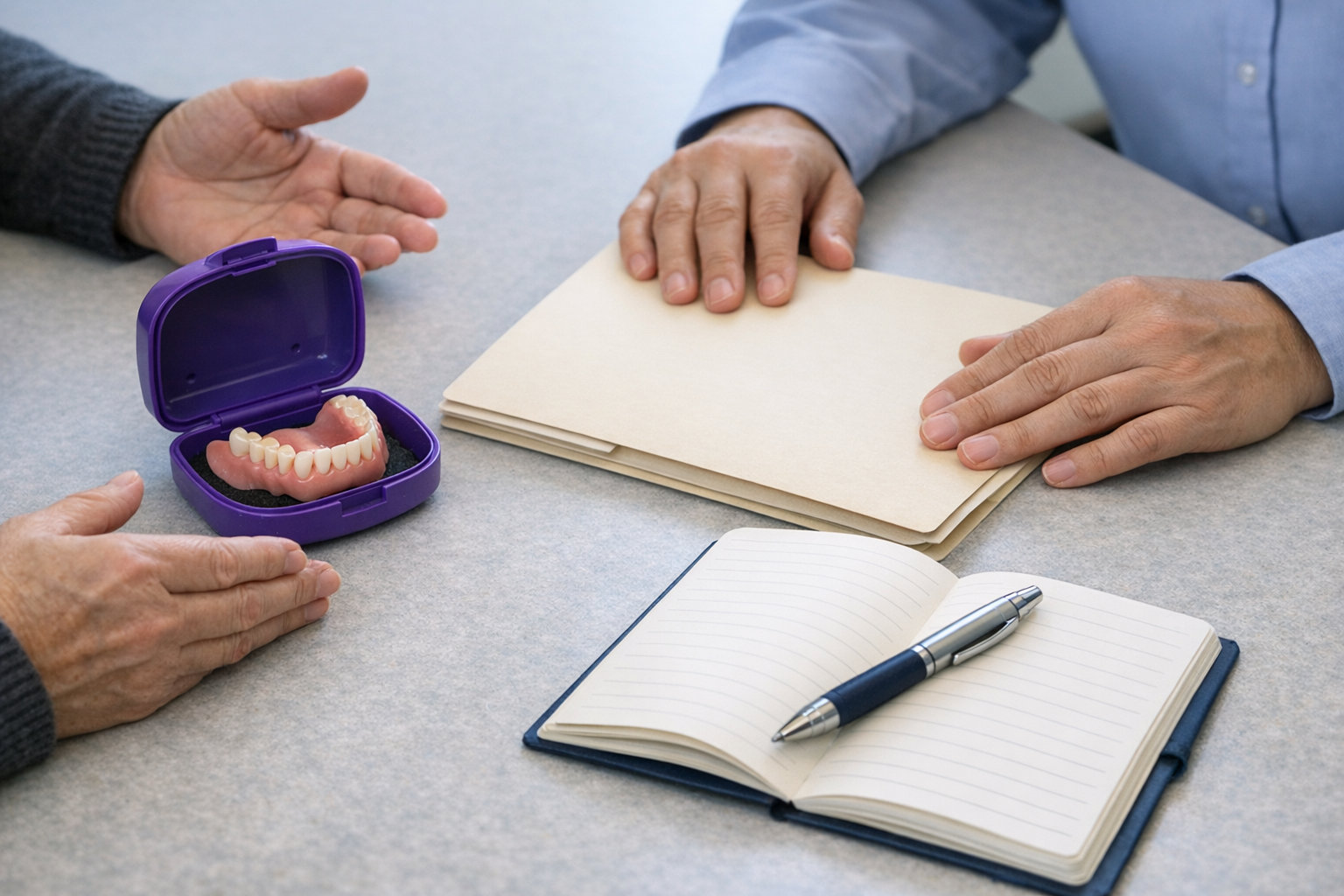
The important next step is a coordinated plan. Ask what is known now, what still needs to be evaluated and which decisions belong to the implant provider versus the denture provider. Patients in Gresham and throughout the Portland Metro can use the consultation to understand whether a new implant-retained denture, an adaptation or a non-implant option best fits the situation.
Stage One: Examination and Treatment Planning
The evaluation may include reviewing your current denture, examining your mouth, discussing your health history and coordinating implant planning. Ask whether imaging or another assessment is needed, who will provide it and how the findings will affect the denture design. You should also understand whether the planned appliance will be removable and how it will connect to the implants.
Write down your main concerns before the visit. For example: “My lower denture lifts when I eat,” “The base is cracked” or “I want to know whether my current denture can be used.” Specific examples are more useful than simply saying that the denture feels wrong. If you are comparing regular and implant-supported options, the guide on Implant-Supported Dentures vs. Traditional Dentures can help you prepare questions about stability, cleaning and treatment trade-offs.
Stage Two: Implant Placement and Healing
If implants are recommended, the implant provider will explain the placement plan and healing requirements. Do not assume that the denture can be permanently attached immediately or that the final attachment design is known before healing is assessed. During this stage, you may need a temporary or adjusted denture, depending on the plan and your providers’ instructions.
Ask how you will manage your current denture during healing, which visits are handled by each provider and when the implant-retained denture can be designed. Healing details are individual, so your clinical team should provide the actual timeline rather than relying on a general promise.
Stage Three: Denture Design, Attachment and Follow-Up
After the implant plan is ready, the removable denture may be designed or modified to connect with the attachments. The final fit, bite, appearance and ease of removal should be evaluated. Even when an existing denture can be adapted, it may require professional changes to its base or internal space. A new overdenture may be recommended if it would produce a more appropriate result.
Maintenance does not end when the denture begins to snap into place. You still need to remove and clean the appliance as directed, care for your mouth and follow instructions for the implants and attachments. Attachments may require future evaluation or replacement, and the denture may need adjustments as your mouth and appliance change. Ask who handles repairs, relines and implant-retained denture adjustments before treatment begins.
A Simple Consultation Checklist
Bring your current denture, any implant records and a short list of situations that cause trouble. Then ask: Is my current denture structurally suitable for adaptation? Would a new overdenture be more appropriate? What implant information is still needed? Which provider handles each stage? What is removable, and how will it be cleaned? What follow-up, repairs or attachment maintenance should I expect?
Also ask for the proposed treatment stages and fees in writing. The Denture Studio does not publish a universal price for this process because the work depends on the examination and plan. A written estimate should identify denture work, implant-related care, attachments, adjustments, relines, repairs and any separate provider fees so you can compare the full plan rather than one headline number.
As a hypothetical example, a patient with a sound denture and a compatible implant plan might be able to discuss adaptation, while someone with a damaged, worn or poorly fitting appliance might be advised to start with a new overdenture. These examples are only illustrations, not predictions. If you are ready to find out which situation applies to you, schedule a consultation and bring the denture you wear now.
Questions Gresham Patients Ask About Switching to Snap-In Dentures
Can Any Regular Denture Be Converted to a Snap-In Denture?
No. The denture’s condition, fit, strength, space and design must be evaluated alongside the implant plan. Some dentures may be adaptable, while others may need substantial changes or replacement with a new implant-retained overdenture.
Do I Need Implants Before I Can Get Snap-In Dentures?
Snap-in dentures use implants or implant attachments for added retention, so an implant provider must evaluate and plan that part of treatment. If you already have implants, bring their records to the denture consultation.
Will Snap-In Dentures Completely Stop Movement?
They are designed to provide additional retention and stability, but no provider should promise that all movement will disappear. Results depend on the implant plan, attachments, denture design, fit and individual circumstances.
Can The Denture Studio Work With My Existing Implant-Retained Denture?
The Denture Studio may be able to help with existing implant-retained dentures, including appropriate repairs and relines. Bring the denture and any implant information so the team can evaluate what may be possible.
What Should I Bring to a Consultation About Switching?
Bring your current denture, implant records if you have them, a list of the problems you notice and questions about cleaning, timing, providers, maintenance and whether adaptation or a new overdenture is recommended.