Snap-In Dentures vs. Fixed Implant Teeth: Understanding Your Options in Portland
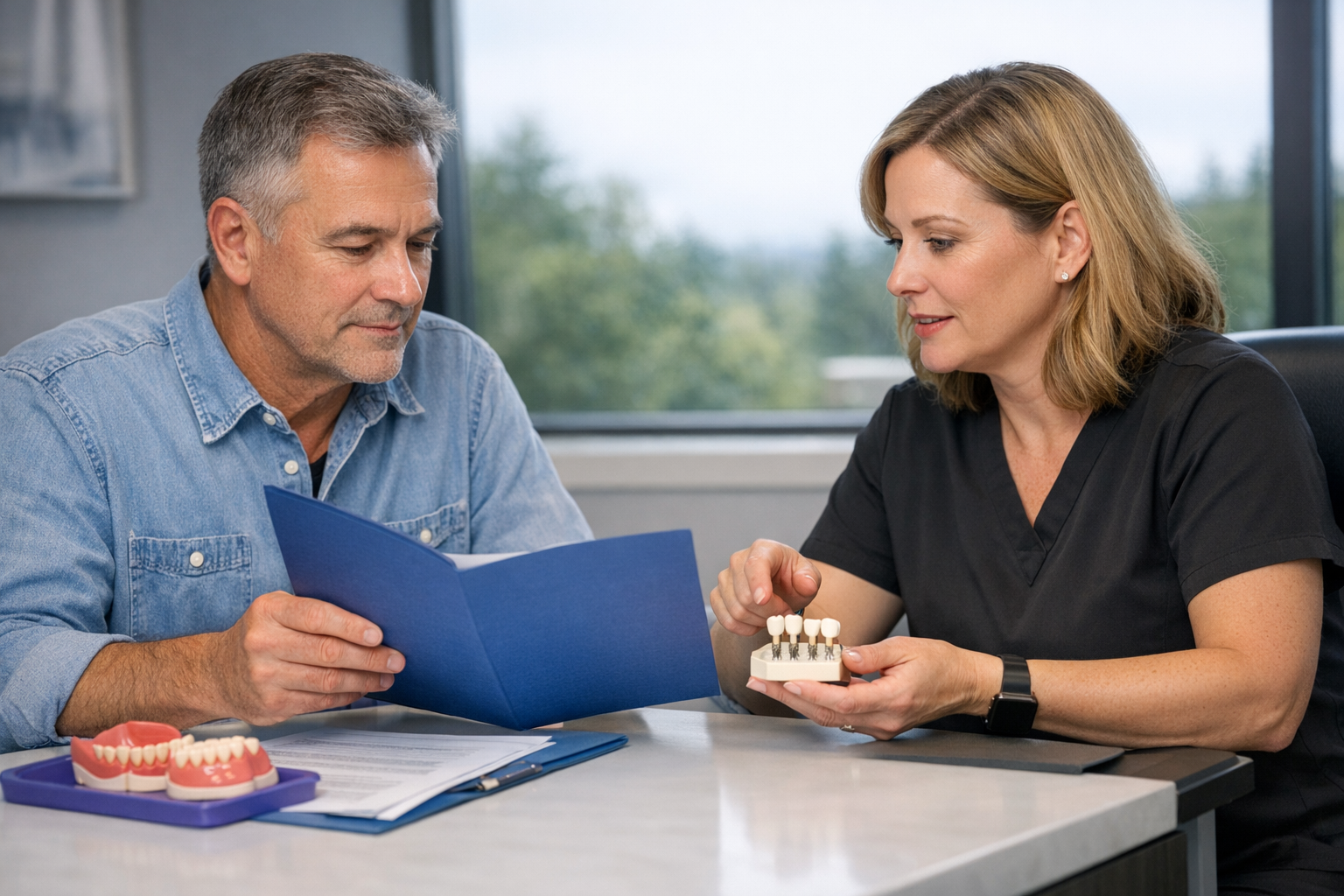
Snap-in dentures and fixed implant teeth can both use dental implants, but they are not the same treatment. Snap-in dentures are removable by the wearer and use implants for added retention. Fixed implant teeth are designed to stay in place and are not normally removed by the patient. The right choice depends on your oral health, implant plan, cleaning needs, budget, timeline, and the recommendations of your treating dental providers.

If you are comparing options in Portland, start by asking a simple question: Do you want a removable denture that feels more secure, or are you exploring a fixed restoration that stays in place? The answer affects daily cleaning, repairs, appointments, and who needs to coordinate your care. The Denture Studio provides implant-supported and implant-retained dentures, so its team can explain the denture side of the conversation while your dental providers evaluate the complete treatment plan.
How Snap-In Dentures and Fixed Implant Teeth Differ
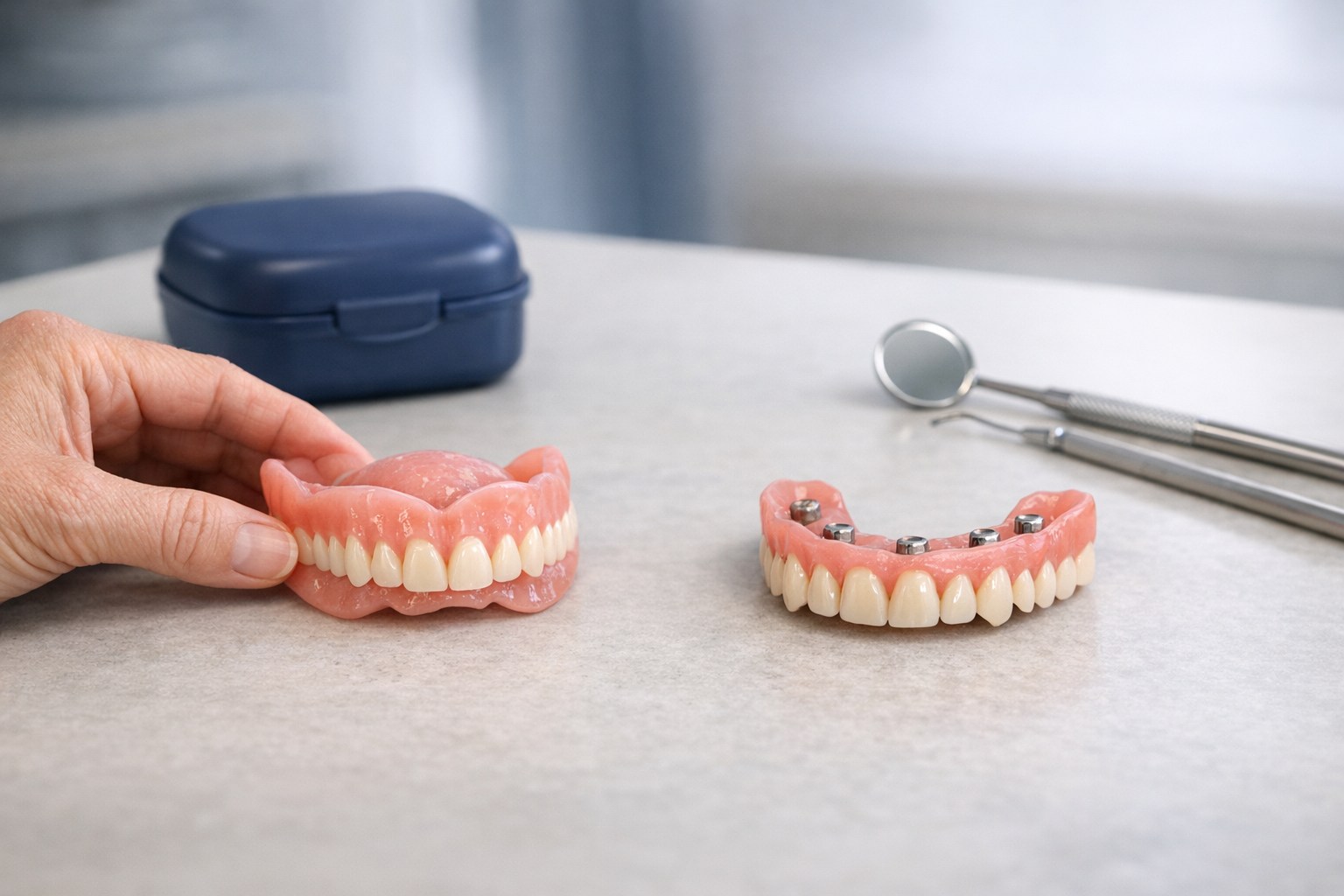
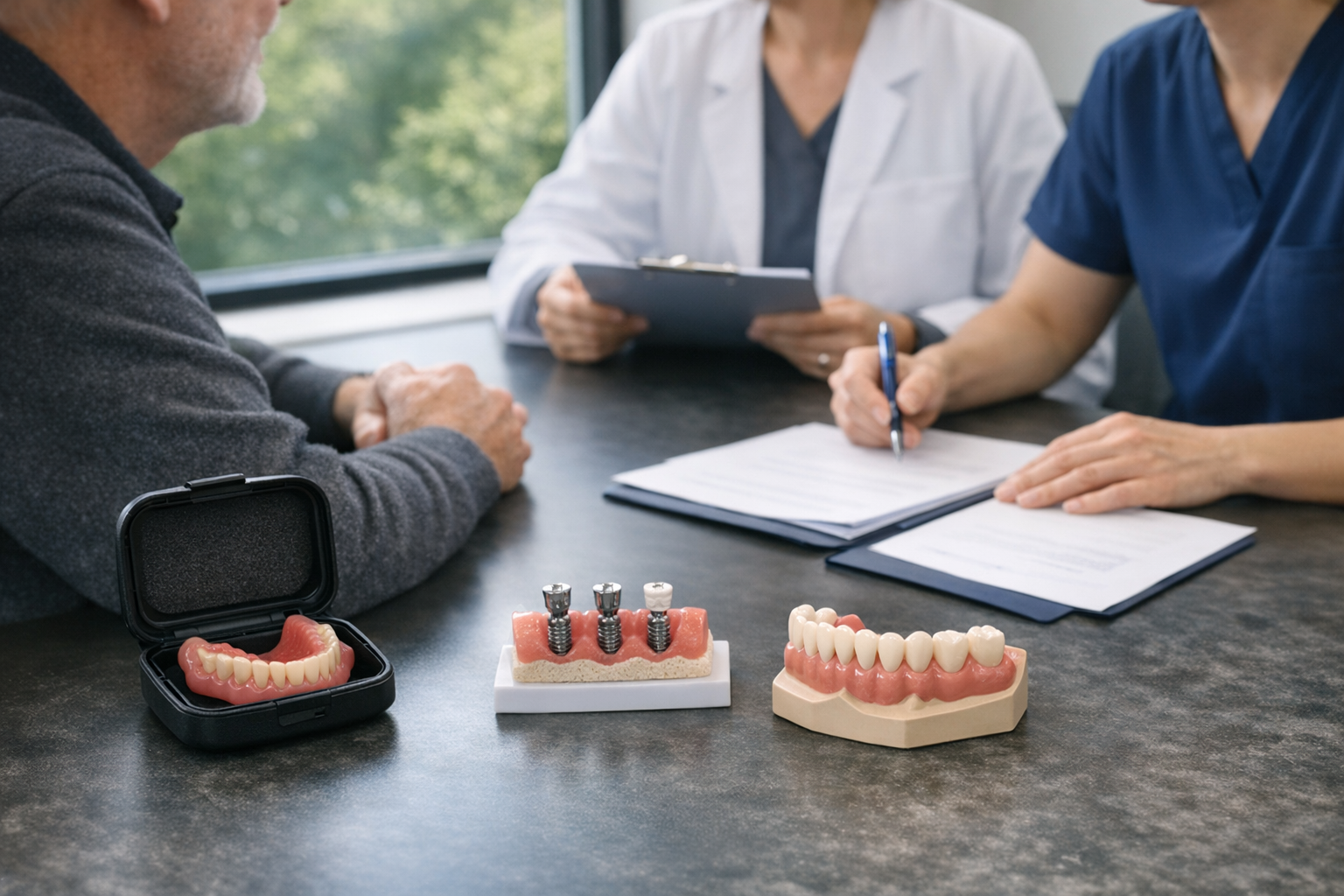
The phrase “implant teeth” can describe several different designs, so ask the provider to show you exactly what is being proposed. A snap-in denture is a removable overdenture. Attachments connected to dental implants help hold the denture in place, but you take it out for cleaning and usually remove it at night according to your care instructions. The denture itself is still a removable appliance.
Fixed implant teeth are intended to remain in place rather than being taken out by the wearer. Depending on the design, a dental professional may need to remove them for examination, repair, or maintenance. That can make them feel more like natural teeth in daily use, but it does not mean they require no special care or future appointments.
Removability changes your daily routine
With snap-in dentures, you have direct access to the inside of the denture and the tissues beneath it. You can clean the appliance separately and follow instructions for cleaning around the implant attachments. This can be useful for people who value being able to remove their teeth for cleaning or who prefer a removable solution with additional retention.
With fixed implant teeth, you clean around the restoration while it is in your mouth. Your dental team may recommend specific brushes, flossing tools, or other methods based on the design and access around the implants. A fixed option can reduce the need to remove the teeth during normal daily use, but it can make professional maintenance especially important if some areas are difficult to reach.
Stability is not the same as permanence
Both options may provide more stability than a traditional denture for an appropriate patient, but they create that experience differently. Snap-in dentures use implants to improve retention while keeping the appliance removable. Fixed implant teeth are designed to remain attached, subject to the treatment plan and the health of the supporting structures.
Neither option should be described as maintenance-free. Implants, attachments, denture bases, artificial teeth, and surrounding tissues all need ongoing attention. Ask what can wear, loosen, break, or need replacement, and whether your team expects routine checks with a denture provider, dentist, implant provider, or more than one professional.
Treatment coordination can look different
A snap-in denture plan may involve implant placement by one provider and denture design, fabrication, fitting, or future adjustments by another. The Denture Studio’s implant-supported denture service is relevant when you need help understanding the removable denture portion of that process. Your implant provider must evaluate the surgical and health-related aspects of treatment.
A fixed option may require closer coordination around implant placement, the final restoration, bite, hygiene access, and long-term service. Ask who will handle each step before treatment begins. A clear division of responsibilities can make it easier to know where to go if the restoration feels uncomfortable, an attachment loosens, or you need a repair.
A Practical Way to Compare Your Portland Options
Instead of choosing based on the label alone, compare each option against the way you live. Write down what you want to improve, what you are willing to manage, and what questions remain unanswered. A consultation should help you understand the design recommended for your mouth, not pressure you into assuming that one option is best for everyone.
For additional background on how removable implant-supported dentures compare with traditional dentures, the guide to implant-supported dentures versus traditional dentures explains retention, daily care, maintenance, treatment steps, and the need for an itemized quote. That comparison is a useful starting point, but it does not replace an evaluation of fixed implant teeth or your individual treatment plan.
Use a comparison worksheet
First, write down the proposed attachment design. Ask how many implants are planned, what the denture or restoration connects to, and whether the appliance can be removed by you. Do not assume that “implant-supported,” “implant-retained,” “snap-in,” and “fixed” mean exactly the same thing in every conversation.
Second, compare hygiene access. Ask how you will clean the teeth, gums, implant areas, attachments, and underside of a removable denture. Ask what tools are recommended and whether a professional cleaning schedule is part of the plan. If you have limited hand strength, vision concerns, or difficulty reaching certain areas, mention that early.
Third, ask about repairs and adjustments. Find out what happens if a tooth chips, an attachment wears, the denture base cracks, or the restoration becomes uncomfortable. Ask which office handles each issue and whether your existing denture can be used, modified, or replaced. An older denture may not be suitable for a new implant design.
Compare time, appointments, and future work
Ask for the expected sequence of appointments, including examinations, implant-related care, impressions or scans, temporary options, try-ins, delivery, adjustments, and follow-up. The exact timeline depends on the treatment plan and should come from your providers. A removable snap-in denture and a fixed restoration may involve different fabrication and adjustment steps.
Also ask what future work could involve. Attachments may need attention, a removable denture may eventually need a reline or replacement, and fixed restorations may require professional access for maintenance or repair. A plan that looks simpler at the start may have different long-term appointments. Compare the full process rather than only the first delivery date.
Request an itemized cost and responsibility list
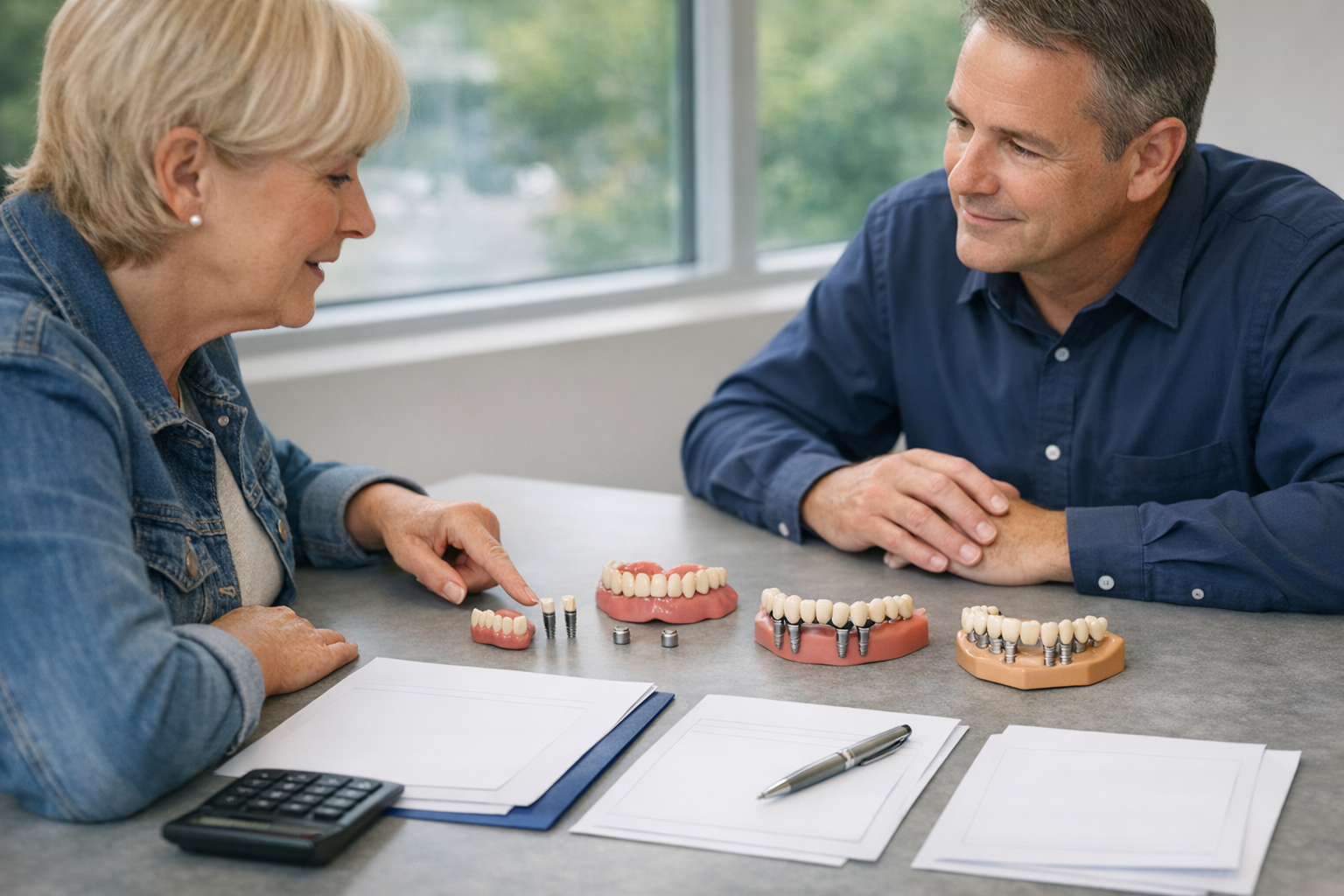
The Denture Studio does not publish verified prices for snap-in dentures or fixed implant teeth, so an exact comparison cannot be provided here. Ask for an itemized, patient-specific quote instead. It should identify implant-related treatment, the denture or fixed restoration, attachments or other components, imaging or laboratory charges if applicable, adjustments, follow-up, and likely future maintenance.
Ask which costs come from which provider and what is included in the quoted treatment. Then compare the total expected cost over the stated treatment period, not just the price of the appliance. If a quote leaves out future repairs or replacement parts, ask how those services are billed. A written list makes it easier to compare two plans fairly.
Test the decision against a hypothetical day
Consider this hypothetical example: A Portland patient wants less denture movement but also wants to remove the appliance for cleaning. A snap-in denture may fit that priority if the treating providers find it appropriate. The patient should still ask about implant care, attachment maintenance, denture removal, and future relines or repairs.
In another hypothetical example, a patient strongly prefers teeth that stay in place during normal use and is comfortable cleaning around a fixed restoration. That preference may make a fixed option worth discussing, but the patient still needs to understand hygiene access, professional maintenance, repair responsibility, and the complete implant plan. Preferences help guide the discussion; they do not determine suitability by themselves.
Snap-In Dentures and Fixed Implant Teeth FAQ
Are snap-in dentures the same as fixed implant teeth?
No. Snap-in dentures are removable by the wearer and use implants for added retention. Fixed implant teeth are designed to remain in place and generally require a dental professional for removal or major maintenance. Ask your provider to identify the exact design being proposed.
Which option is easier to clean?
Neither should be called automatically easy or maintenance-free. Snap-in dentures can be removed so you can clean the appliance separately and clean around the attachments. Fixed implant teeth are cleaned in the mouth and may require special tools to reach all areas. Your treating team should demonstrate the routine for your design.
Can The Denture Studio provide fixed implant teeth?
The verified site information describes The Denture Studio’s implant-supported and implant-retained removable dentures. It does not establish that the studio provides fixed implant teeth. The team can help explain the removable denture side of an implant plan, while your dental and implant providers evaluate and coordinate the complete treatment.
Can my current denture be converted into a snap-in denture?
Sometimes an existing denture can provide useful information, but it may not be suitable for a long-term implant-retained design. Its fit, age, wear, strength, tooth arrangement, available space, and attachment positions all matter. Ask for a direct assessment rather than assuming modification will be possible or less expensive.
How should I compare the cost of these options?
Request itemized, patient-specific quotes. Compare implant-related treatment, the denture or fixed restoration, attachments or components, appointments, adjustments, repairs, and possible future maintenance. The Denture Studio does not publish verified prices for either option, so a complete quote is needed for a meaningful comparison.